
The Missouri Lakes 1 wildfire is the kind of emergency situation that triggers evacuation notices from the sheriff’s departments. Those kinds of situations can trigger a pre-evacuation or an
This item is available in full to subscribers.
At this time, we ask you to confirm your subscription at www.themtnear.com, to continue accessing the only weekly paper in the Peak to Peak region to cover ALL the news you need! Simply click Confirm my subscription now!.
If you are a digital subscriber with an active, online-only subscription then you already have an account here. Just reset your password if you've not yet logged in to your account on this new site.
Otherwise, click here to view your options for subscribing.
Questions? Call us at 303-810-5409 or email info@themountainear.com.
Please log in to continue |
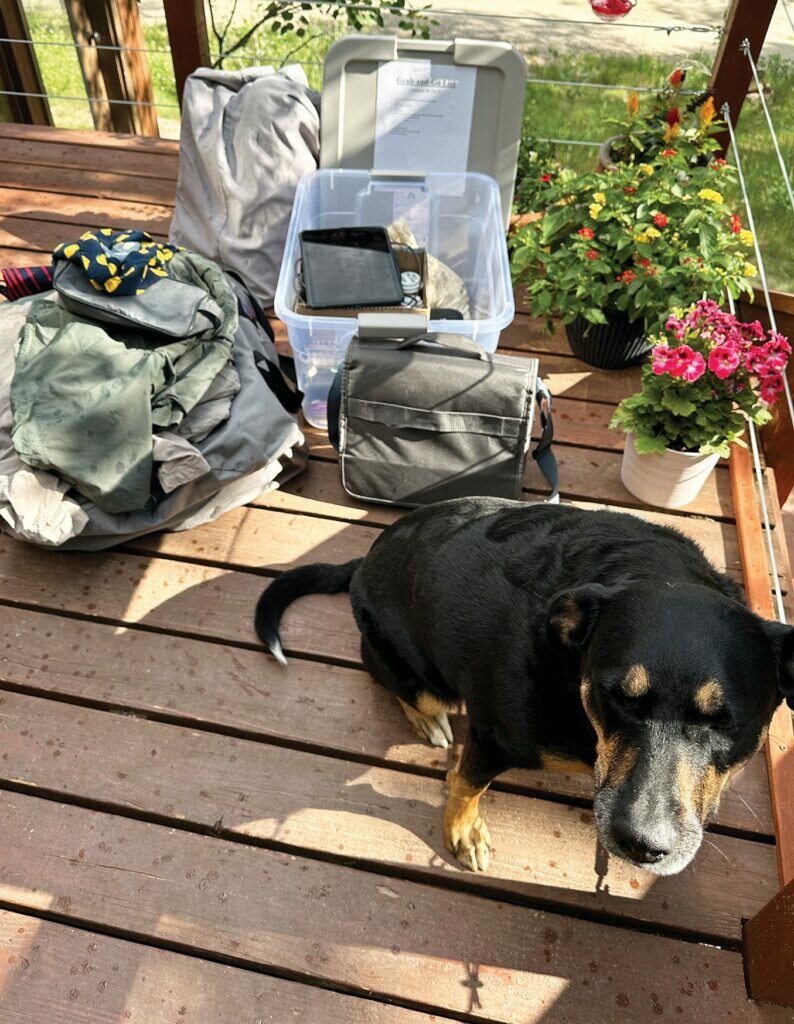
The Missouri Lakes 1 wildfire is the kind of emergency situation that triggers evacuation notices from the sheriff’s departments. Those kinds of situations can trigger a pre-evacuation or an immediate evacuation notification for residents who are signed up on the Hyper-Reach system. Both situations require assembling assets for transport, but the time frames and items to take can be different. The grab-and-go bag technique is a popular method of assembling needed items in a hurry.
The basic concept of creating a grab-and-go bag is to put in one bag things that you would need if you were going to be out of the house for several days or longer. If the notification is for an immediate evacuation, the bag needs already to be full so that all you have to do is put in some last-minute things like extra car keys or the watch charger before walking out the door with the kids and pets.
The key to a quality grab-and-go bag is a list of items that you need to remember to take with you – besides the kids and pets. The list can be on a clipboard in the bag or taped to the lid if you are using a box.
The list enumerates all the items that need to be in the bag and tasks that need to be accomplished for an orderly evacuation from the premises. In the rush of evacuating, the list will be reminders of things that aren’t in the bag but can be collected quickly. In a crisis you are likely to forget something important, like your medications or little Kenny’s blanket, if you try to keep the list in your head. Keep the list current and mark off the items that are actually in the bag.
Items that are often included in a grab-and-go bag are family documents (birth certificates/passports), rare coins, electronics (cables and laptops), flashlights, batteries, clothing, medicines, pet food, family photos. The list of items will be different for each family or individual. The important point is to make a list and set it aside someplace in the house where the items on the list can be stored.
For pre-evacuation notices, the process of checking your grab-and-go bag for all the items on the list can be more thorough. The list might include additional things to do, like disconnecting the TV equipment or leaving rakes and shovels out for the firefighters.
Since the wildfire season will go well into the fall, it is a good idea to take pre-emptive actions – like storing snowmobiles or a trailer at an offsite storage lot to alleviate the risk of trying to tow them out during emergency evacuation.
Plastic tubs with family photo albums or family heirlooms can be stored in the garage of a relative. If something is vitally important to the legacy of your family, then store it somewhere out of the fire zone until fire season is over. Uploading photos and documents to a cloud server is also effective backup.
If the pre-evacuation notification is early, then additional items like a favorite pillow or pet toys can also be added to the bags if there is enough room in the car. Favorite plants need to be boxed (which is a good reason for keeping cardboard boxes around) so they aren’t rolling around loose in the car.
The majority of the emergency kit websites list water and non-perishable food items, but if the meet up place is in Denver, then are those items really necessary? A decent first aid kit is required on all of them. Pets need leashes, cages and food in their kit.
Realistically, you could easily have more than one bag to fit all the items that you want to take with you. The key is having a list and knowing where to look for everything on it in a hurry.
Living in Wildland Urban Interface (WUI) areas requires a readiness to leave at any time and being ready to leave successfully requires preparation and creativity to execute.
For more information on assembling a grab-and-go bag, use the Internet search term Build an emergency kit and grab-and-go bag. CSU Extension Agent Jennifer Cook (303-582-9106/ Jennifer.Cook@colostate.edu) also has materials and information on preparing for an emergency.


