
Judge affirms workers' status as employees, not contractors, in wage theft case
This item is available in full to subscribers.
At this time, we ask you to confirm your subscription at www.themtnear.com, to continue accessing the only weekly paper in the Peak to Peak region to cover ALL the news you need! Simply click Confirm my subscription now!.
If you are a digital subscriber with an active, online-only subscription then you already have an account here. Just reset your password if you've not yet logged in to your account on this new site.
Otherwise, click here to view your options for subscribing.
Questions? Call us at 303-810-5409 or email info@themountainear.com.
Please log in to continue |
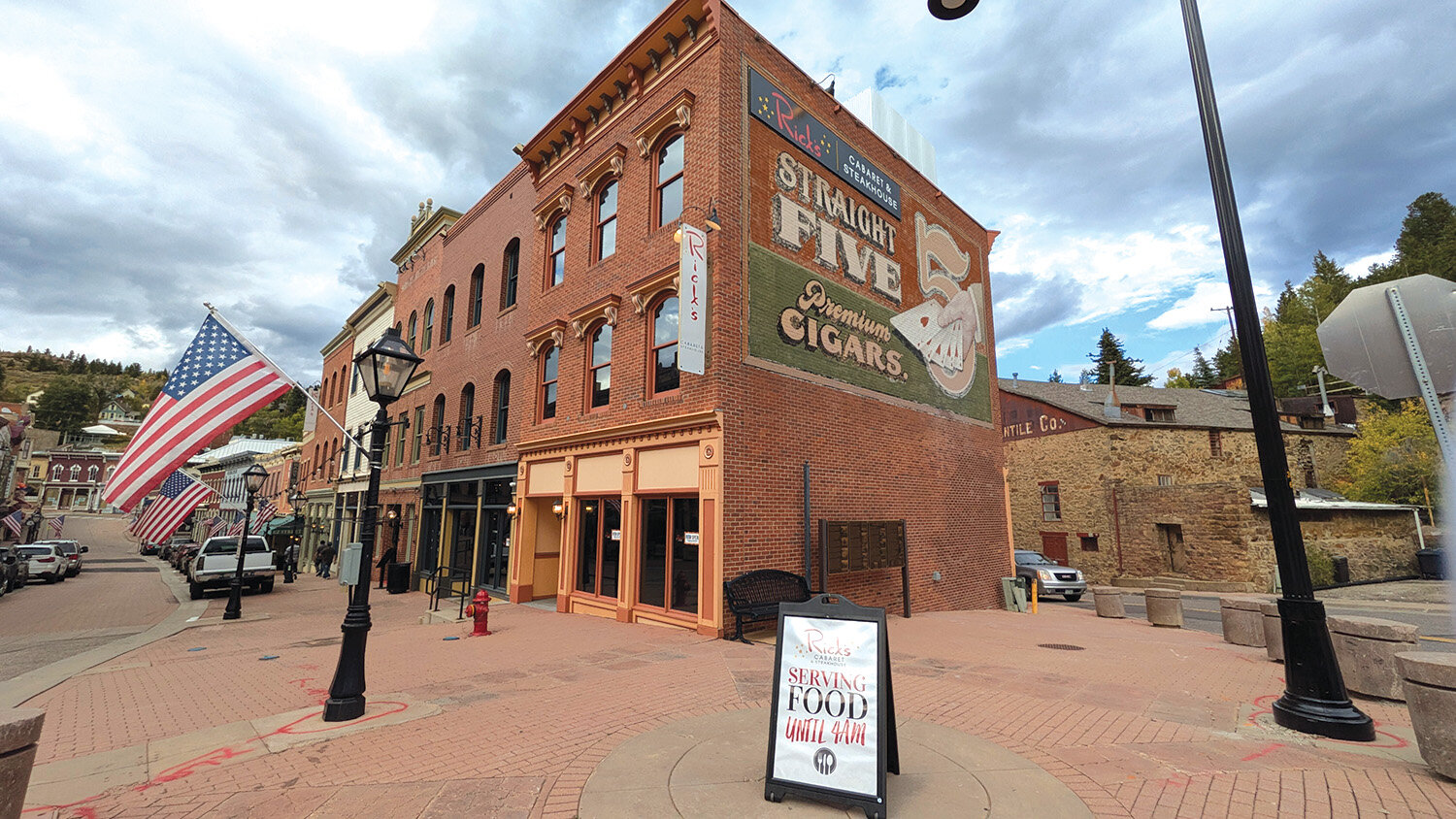
Rick's Cabaret and Steakhouse at 130 Main Street in Central City.
DENVER — A recent Denver District Court ruling has reaffirmed that performers at two Denver strip clubs owned by RCI Hospitality Holdings are legally considered employees.
The decision, issued November 20, rejects the clubs’ attempts to stop the City’s wage-theft investigation and confirms that dancers and other workers are entitled to Denver’s full labor protections.
A November 25 Denverite article by Paolo Zialcita stated: “Judge Jon J. Olafson issued an order on November 20, affirming two previous decisions from a hearing officer that allowed the investigation and fees to stand.
"The club’s appeal alleged that the hearing officer overstepped her jurisdiction in multiple ways by allowing the investigation to stand, which Judge Olafson disagreed with.”
The case involves Diamond Cabaret and Rick’s Cabaret in Denver, both of which argued that entertainers should be treated as independent “licensees,” not employees. The judge disagreed and allowed enforcement to proceed.
The ruling follows a sweeping investigation by the Denver Auditor’s Office, which found that more than 230 workers at several establishments—entertainers, bartenders, and servers—had been subject to wage theft. The investigation concluded that the clubs misclassified entertainers, failed to pay minimum wage, and required performers to pay “house fees” to use the space.
The audit also identified improper use of tip credits and mandatory tip sharing with management. Denver ordered a combined $14 million in restitution and penalties back in February, but none of it has been paid to date.
The Denver Auditor’s office wrote, “We sought payroll and other records for entertainers, like contracts and evidence of the fees they have to pay to work. When the strip clubs refused to provide these documents—even wrongly claiming some records did not exist—Denver Labor imposed fines and issued subpoenas.
"The strip clubs appealed the fines and, in 2024, petitioned a hearing officer to quash the subpoenas, believing Denver Labor had no authority to investigate the strip clubs for wage theft.”
RCI continues to push back. The company has issued statements disputing Denver Labor’s conclusions, insisting the clubs followed the law.
On November 30, after RCI spokesperson Gary Fishman responded to an inquiry, the company issued a November 24 press release that expanded on its objections.
In that statement, the company said Diamond Cabaret, PT’s Showclub, PT’s Showclub Centerfold, and Rick’s Cabaret have formally appealed two “erroneous rulings” and have filed Notices of Appeal with the Colorado Court of Appeals on November 21.
The clubs argue that the Denver District Court failed to address “key claims” underlying what they call Denver Labor’s “illegal and unauthorized investigations outside its lawful purview.”
The statement maintains that wage-enforcement authority belongs not to the City Auditor but to state agencies, such as the Colorado Department of Labor and Employment.
The press release also noted that the clubs are pursuing Denver Labor and the City in a federal lawsuit alleging constitutional violations. It describes what RCI called “retaliatory and unauthorized actions” by City officials and stated the clubs “are confident they are on the right side of the law.”
The release cited a separate October 17 administrative decision involving a dancer, Devynn Dewey, whose case, according to the hearing officer, did not establish that entertainers receive “wages” from the clubs under Denver’s own definitions.
RCI stressed that the City did not appeal that decision and argued that it contradicts Denver Labor’s broader position.
The release further referenced a federal magistrate judge’s findings that the enforcement provisions of Denver Revised Municipal Code Chapter 58—the foundation for Denver Labor’s authority—were “without effect” because they allegedly conflict with the Denver City Charter.
The company’s troubles go well beyond Denver. On September 16, 2025, New York’s Attorney General unsealed a 79-count indictment accusing RCI, five of its executives, and three of its Manhattan clubs of participating in a multimillion dollar criminal tax fraud and bribery scheme.
Prosecutors allege the company bribed a state auditor with lavish perks, including complimentary trips, hotel stays, meals, and private dances, to escape more than $8 million in sales taxes tied to the sale of “Dance Dollars,” an in-house currency used for private dances.
RCI issued a public statement denying the charges. “These indictments contain only allegations, which we believe are baseless. RCI and the individuals involved are presumed innocent and should be allowed to have their day in court.”
The legal exposure, now spanning municipalities and states, further clouds RCI’s future.
In a not-so-shocking move, RCI recently announced new leadership. A November 28 RCI press release named board-appointed Travis Reese as interim president and CEO, and named Albert Molina interim CFO.
The move means the departure of longtime CEO Eric Langan and CFO Bradley Chhay, both of whom will remain as advisers. While the company did not directly tie the leadership change to the wage-theft case, legal troubles, or the falling price of RCI stock, the timing raises questions.
About an hour west of Denver, the controversy continues in Central City, where a different Rick’s Cabaret opened on Main Street over the summer. Langan lives in Central City part-time and has purchased several properties.
When Langan bought the future site of Rick’s Cabaret and Steakhouse at 130 Main Street from the City of Central, he claims the town knew what he intended to do with it.
He has publicly maintained that the business is not a sexually-oriented business, saying it operates as a nightclub and restaurant. He insists that the issue concerns women’s rights and is determined to see the First Amendment right upheld so workers can “express themselves.”
In a conversation with Langan before his departure as CEO, he defended the contractor model. He said many performers are earning six-figure incomes as independent contractors, which would be impossible under a W-2 arrangement where performers would earn only minimum wage.
According to him, reclassifying dancers as hourly employees would reduce their earnings drastically. He argued that performers are not traditional employees but subcontractors who use the space to express themselves and run their own businesses.
Whatever the classification, many Central residents believe Rick’s Cabaret and Steakhouse violates the City’s zoning laws and contradicts past rulings restricting adult-entertainment establishments to the industrial zone, not the historic district where it currently resides.
Tension increased during the November election, when Central City voters considered Measure 2A, a proposal that would have formally allowed sexually oriented businesses in the Historic Gaming District. A majority voted no.
At the most recent City Council meeting, members went into Executive Session to discuss legal questions regarding how to enforce the vote's outcome, and how the City should respond to concerns about the club’s zoning status.
Eric Langan could not be reached for comment, and an email to Denver Labor’s Matthew Fritz-Mauer has not yet received a reply.
The combination of the court ruling, unpaid restitution, corporate turnover, and community pushback leaves the company in a complicated position.
For the Denver workers at the center of the investigation, the judge’s ruling represents a significant step toward recovering lost wages. But it does not seem RCI will give up defending itself anytime soon.
For Central City residents, the debate over the Main Street club is still unfolding and is now involved in the broader scrutiny the company is facing.


