
It had been the longest six months of her life. She didn’t lose any friends, and she suffered no major injuries. Physical injuries, anyway. She did not get out unscathed.
Laura Cartwright
This item is available in full to subscribers.
At this time, we ask you to confirm your subscription at www.themtnear.com, to continue accessing the only weekly paper in the Peak to Peak region to cover ALL the news you need! Simply click Confirm my subscription now!.
If you are a digital subscriber with an active, online-only subscription then you already have an account here. Just reset your password if you've not yet logged in to your account on this new site.
Otherwise, click here to view your options for subscribing.
Questions? Call us at 303-810-5409 or email info@themountainear.com.
Please log in to continue |
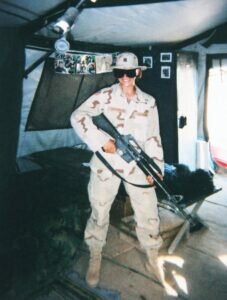


It had been the longest six months of her life. She didn’t lose any friends, and she suffered no major injuries. Physical injuries, anyway. She did not get out unscathed.
Laura Cartwright grew up in farm country outside of Fort Wayne, Indiana. It was the 80s and 90s, and she was very much the tomboy - woods, tree forts, biking, fishing, looking for new places to explore. She was competitive in school, and knew early on that she had a special interest in healthcare.
At 14, Laura met a girl from Argentina. She thought that would be a good place to learn Spanish and experience a different culture. So that’s exactly where she went, as soon as she was out of high school, in 1998. Since she knew nothing about the place, that’s where she wanted to go.
Laura loved, and loves, Argentina. “The people are laid back, it has the most laid back culture I have ever experienced. What it would take an American to do takes them four times longer, because they always take time to socialize. They are so happy, a much happier people than us.”
After six months Laura returned home, went to college, and became a dental assistant. “It’s a good field because of the job stability. It’s interesting, you work with people, and you can be creative. Putting fillings in peoples’ teeth is kind of artistic, you have to make it look like a tooth. You can’t just cram stuff in there.” In the same year she married her boyfriend, an Army veteran, and had their daughter, Alyssa.
“There was a little Iraqi girl, maybe seven, who was hit by shrapnel. I watched her die, with her mother next to her. We did that to her. I didn’t personally, but our government did that to her.”
Laura was not ready for a nine-to-five job, so in 2002 she enlisted in the Army. “The towers had fallen the year before, but I wasn’t thinking about that when I signed up. I had no idea what was coming.”
Basic training was fun, and Laura excelled, earning the highest physical training score and a medal – the only medal – for basic. But those in charge were holding something back, there was something they didn’t want the new recruits to know.
There were whispers though, whispers that when they completed basic they might go “play in the sandbox.” Nobody knew if that would be Saudi Arabia, Iraq, or maybe Iran. Three months after arriving at her permanent duty station in Germany, she was deployed, first to Kuwait and then Iraq. “My whole unit, and then half of another unit, one hundred of us. Nobody deserted, you had to go.”
“I was scared shitless.”
In Kuwait, “the big scary shit was the Scud missile attacks. All day and all night, for days on end. I was so scared the first few days I didn’t even brush my teeth. I couldn’t cry, I had gotten all my tears out ahead of time, when I left my daughter. Then one day my brain just turned off emotionally, and I wasn’t scared anymore. I think I was terrified for so long my brain couldn’t handle it.”
The missiles were like fireworks on steroids. Loud and powerful. Once, she woke up during an attack, floating above the ground. She had been blasted into the air.
“I tried talking to my husband about my experiences, but he didn’t seem to have any sympathy or empathy. He had only gone through one Scud missile attack, and he said his life flashed before his eyes. I asked him to imagine going through that day after day, every day, for months. He said he understood, and I said ‘No you don’t! One traumatic event is very different from hundreds of traumatic events. If you can get PTSD from one car accident, imagine this!’”
Laura went into Iraq right behind the infantry. This was the Shock and Awe phase of Operation Iraqi Freedom / Operation Enduring Freedom. “As we came in there were still cars on fire, big bomb holes in the ground, buildings destroyed. The immediate aftermath, just like in the movies. My fear resurfaced for a bit.”
On the first day her unit moved onto an old Iraqi Air Force base and set up a tent city. There were no amenities other than a shower tent. Each soldier was allowed five minutes to shower. It was beyond hot - the worst heat was June, July, and August, with highs of 135 degrees. Laura didn’t see a cloud for three months.
“You never see life the same again. Initially, we tried to set up a dental clinic, but we had no infrastructure. Just tents. It was so hot! Restrooms were wooden outhouses, with barrels cut off half way and filled with jet fuel. Twice a day we replaced the barrels, set the used ones on fire, and let them burn for eight hours. Shit-burning detail. We breathed in so much jet fuel, so many toxins.”
Laura was transferred to a combat support hospital. “There was a small dental clinic within the hospital.” Conditions were worse.
“Their restroom was a bunch of wooden stalls over a really big pit. There were so many flies, your entire crotch was covered with at least 50 of them. And they had just been on somebody else’s ass. It was hard to concentrate to go to the bathroom. We were breathing in diesel fuel and diesel smoke 24/7, from vehicles, generators, and planes. The fumes were trapped inside the tents. We even burned our trash with diesel fuel. I get really bad PTSD from the smell of diesel.”
There were mortar attacks every day, they were makeshift bombs. “I’d hear the mortars hit the base, and within a few minutes they’d be wheeling the injured soldiers in. I saw a lot of soldiers who had been shot and hit with shrapnel and bombs, and I thought, that could be me later on today or tomorrow.”
“Somebody fired onto the base and I heard a weapon fire behind me. I was in an open area – is someone shooting at me? Will I be shot in the back? I just kept walking, there was no place to take shelter. There was a woman in my unit who had a mortar land next to her, but it was a dud. She was the girl in the tent right next to me. So close.”
Iraqi women had to stay covered. If they smiled they had to cover it, they were not allowed to visibly smile. The Iraqi women realized - to a point - how oppressed they were, and they looked at women soldiers in awe. The American men, not so much.
Most units were 90% male (Laura’s was closer to 50-50, because it was a medical unit.) If there was blame to be placed, the men were quick to place it on a woman. Not all the men were that way - many were decent. Then again, some were abusive, and there were male soldiers who raped Iraqi women. “I forgive some people, but not everybody. That’s your only family there.” While others bought moonshine and cannabis from the Iraqis, Laura stayed sober the entire time. Just to be safe.
“I wasn’t able to fall asleep at night because of the heat, unless I drenched myself in water. We didn’t even have pillows. I was always tired. I took a nap in the dental clinic, and I woke up to a horribly disfigured, burned, Iraqi man kissing me.”
They never talked to each other about what they were doing. “We kept our heads down, tried to get through it, tried to survive.” Every day, in their heads, they’d ask “why are we here?”
Laura knew they were there to get rid of Saddam, but she didn’t know the bigger reason. The real reason. So she came up with her own. “You have to make up your own purpose for being there. Mine was to help people with dental care. It was, to me, humanitarian work, taking care of Iraqis and US soldiers. Taking care of people was my own reason that I gave myself, for being there.”
Laura survived her six months in the sandbox. Back in Germany, she was stunned at how everything was so clean. It was in the upper 90s – a heatwave – but Laura felt fine, it was nothing to her. “My bed was so soft, it felt like I was in a cloud. I had unlimited hot water! I felt so guilty, everything was so posh and luxurious. I had fresh produce, real food. In Iraq we had been so malnourished I would dream about tables of food in front of me, with pizza and ice cream. I’d always wake up before I got to eat it.”
She completed her final year and a half in Germany, working in a dental clinic on base. “When I walked around the base, I could just look at a soldier and know if they had been in Iraq. If they had not, they were carefree and I resented them – I would think ‘stop acting like that, you have no idea what’s going on!’ The soldiers who had been in Iraq looked normal to me.”
Then home. “I still have PTSD - nightmares, flashbacks, grappling with survivor guilt and why was I there. I also have chronic fatigue syndrome. Apparently enough war veterans have experienced these same symptoms that chronic fatigue is a presumptive condition, you automatically get some disability percentage for it, without having to prove it. And I have chronic sinus infections, because of all the toxic air. Yet I had to fight for my disability.”
Laura says a person can only handle so much stress in a lifetime, and she hit her limit in the war. “I have the energy of an 80 year old. I stopped working. I take life slowly, and I try to not schedule more than one activity per day. I nap more, and I sleep in. I’m like an Argentine, I’m really laid back, not rushing. I’m not even capable of rushing anymore.”
The VA wants to medicate her, and she’s tried antidepressants. They don’t help. About a year ago Laura found the Boulder Vet Center, which offers support and counseling for people getting out of the military. It’s been good for her.
Laura’s marriage did not survive. She went back to college, this time in Denver, to become a dental hygienist. She lived in Boulder, and a friend brought her to Nederland. “Wow, it’s beautiful,” she thought. “I saw windows that had sheets for curtains, and everybody dressed like they were homeless.”
It was Laura’s first time in Ned, but she had been here before. “When I was in Iraq, I often had to go to my happy place in my head. I pictured a beautiful lake, with a nice little town behind it, everybody friendly, and a mountain range in the background. After I moved to Ned, I realized it was my happy place.”
Laura and her daughter live here now, with Eric Stone, off of Lazy Z Road. Her relationships with both are great. She hikes, gardens, goes to festivals, and travels to Argentina. She’s made the Very Nice Brewery her home place. “The regulars there like me, they are down to earth. Just a good group of people.” She’s safe now.
“With the Ukraine war, you see Russia as the enemy and you think, was I one of the Russians? I get shaky every time I talk about it. An inner trembling.”
Laura is not okay. But she’s getting there.


