
Neuroscientists reveal the critical ingredients for raising emotionally resilient and well-rounded children. Throughout our Mountain Strong Families Sessions, we’ve learned that children
This item is available in full to subscribers.
At this time, we ask you to confirm your subscription at www.themtnear.com, to continue accessing the only weekly paper in the Peak to Peak region to cover ALL the news you need! Simply click Confirm my subscription now!.
If you are a digital subscriber with an active, online-only subscription then you already have an account here. Just reset your password if you've not yet logged in to your account on this new site.
Otherwise, click here to view your options for subscribing.
Questions? Call us at 303-810-5409 or email info@themountainear.com.
Please log in to continue |
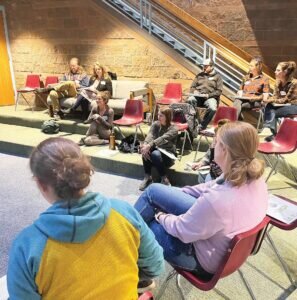
Neuroscientists reveal the critical ingredients for raising emotionally resilient and well-rounded children. Throughout our Mountain Strong Families Sessions, we’ve learned that children require four essential elements for their development: to be seen, soothed, safe, and secure in their connection with a caring adult. How we, as parents, respond to our children’s emotional expressions and behaviors plays a pivotal role in shaping their social-emotional competence.
When parents provide nurturing support, they cultivate a robust nurturing aspect within their child’s personality. In contrast, harsh and hurtful parenting can lead children to develop a victim mindset and normalize power struggles in various life situations.
At the recent Mountain Strong Families Event, hosted by TEENS, Inc., at Nederland Elementary School, parents delved into nurturing themselves to nurture their children. Acknowledging that no parent is 100% nurturing all the time, this session shed light on the everyday struggles parents face. It’s eye-opening to learn that 90% of parents say they have raised their voices in frustration, and 67% have resorted to reactive disciplinary measures.
However, when parents take steps to nurture themselves, these reactive and victim-driven tendencies become less pronounced. To understand why we may react instead of responding gently to our children, we must explore our childhood experiences and how they influenced our emotional wiring and coping mechanisms.
Dr. Dan Siegel reminds us that making sense of our early experiences is paramount, even when challenging. This understanding helps us break free from unhealthy generational patterns and fosters brain rewiring that promotes overall well-being. Local counselors are ready to assist those who feel stuck in parenting habits that could be more nurturing.
As parents, we all have moments of knee-jerk reactions to our children’s behavior driven by specific emotions, comments, or behaviors. These reactions stem from our innate fight, flight, or freeze responses, which were once crucial for survival. As adults, we may find ourselves stuck in reactive patterns to cope with the stresses of life, including punitive discipline, escaping to screens, or numbing with substances.
The emotions and coping patterns we carry from our childhood don’t simply disappear; they linger in our bodies as tension and chronic stress. Effective parenting involves re-parenting ourselves to prevent projecting our unresolved baggage onto our children.
Mountain Strong Families participants learned a practical 3-step process for handling overwhelming moments with their children. First, recognizing the initial signs of agitation and pausing to breathe consciously can bring the rational brain back online. This process, aptly named “Stop, Drop, and Breathe,” fosters a connection with the responsive part of the brain.
Secondly, parents can regulate their reactions by reframing negative thoughts. Creating calming mantras, such as “This is not an emergency” or “My child isn’t having a hard time; my child is having a hard time,” can help bring calmness in the face of challenges.
Lastly, parents can healthily redirect their excess energy to prevent harmful outbursts. Activities like running hands under water, stepping out of the room briefly, doing physical exercises, or dancing can help shift the focus from reacting to responding with empathy.
Depending on our understanding of how our brains function empowers us to rewire our habits toward empathy. Implementing these strategies can take approximately twelve weeks to minimize yelling, shaming, and punishing children.
Parents also examined the level of stress in their lives and their struggles to meet their basic needs. Reflecting on the six dimensions of wellness, attendees brainstormed ways to restructure their lives for physical activity, sleep, creativity, intellectual stimulation, social interaction, emotional health, and spirituality.
Indeed, providing emotional support to our children when our cups are empty is challenging. Caregivers committed to self-nurture by questioning damaging gender roles, work demands, and the lack of support from extended family and friends. This awareness prompted parents to prioritize friendships, exercise, breathwork, therapy, and positive self-talk.
Parents acknowledged the need to ask for help and make time for themselves, recognizing the transformative power of self-care. As one parent expressed, “I am realizing how important it is to prioritize my own mental health so I can raise healthy children.”
The next session of Mountain Strong Families will be on Tuesday, December 5, from 5:15 - 7:30 p.m. To register for dinner, childcare, and the class, please contact betsy@teensinc.org. We look forward to nurturing stronger families together.


