
So, you moved to the mountains because you love wildlife and want to be close to nature. That’s great! Do you know what isn’t great? Harassing wildlife. Feeding wildlife is a form of
This item is available in full to subscribers.
At this time, we ask you to confirm your subscription at www.themtnear.com, to continue accessing the only weekly paper in the Peak to Peak region to cover ALL the news you need! Simply click Confirm my subscription now!.
If you are a digital subscriber with an active, online-only subscription then you already have an account here. Just reset your password if you've not yet logged in to your account on this new site.
Otherwise, click here to view your options for subscribing.
Questions? Call us at 303-810-5409 or email info@themountainear.com.
Please log in to continue |
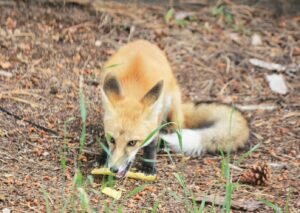
So, you moved to the mountains because you love wildlife and want to be close to nature. That’s great! Do you know what isn’t great? Harassing wildlife. Feeding wildlife is a form of harassment and unacceptable in the state of Colorado.
According to the Colorado Parks and Wildlife (CPW), wild animals should not be harassed, captured, domesticated, or fed. Intentional or inadvertent feeding is one of the most common causes of wildlife problems, and it is illegal to feed deer, bighorn sheep, mountain goats, pronghorn, moose, bears, and elk in our state.
Feeding wildlife brings them into closer contact with humans. Once they get used to people, they lose their fear of people. It also brings in predators and increases the risk of traffic collisions, encounters with dangerous animals, and a hefty fine.
Another message from the CPW states, “It is unnatural to have large numbers of animals congregate at a single place where they know they can obtain food, and a single infected animal can spread diseases through these interactions.”
Need more reasons not to feed wildlife?
Here is a list of a few more:
• Areas where animals are fed accumulate feces, saliva, and urine. Feces, saliva, and urine harbor parasites, bacteria, viruses, and prions that cause chronic wasting disease.
• Animals attracted to the provided food are exposed to the pathogens in the environment and can also spread pathogens directly to each other through “nose-to-nose” contact.
• Animals already stressed from winter conditions are more susceptible to diseases, making winter feeding particularly dangerous for wildlife health.
• Humans are generally more tempted to feed wildlife during winter. The assumption is that there’s a lack of resources for wildlife, but this couldn’t be further from the truth. Let’s take deer, for example. Deer have a better chance of surviving winter conditions without additional food.
• A deer’s digestive system can adjust to changes in the available food. Deer that are suddenly given food outside of their normal diet suffer a shock to their digestive system that not only makes it difficult for them to digest but can cause acid burns to the stomach from the byproducts of digesting carbohydrates.
Check out these other reasons:
• Grass hay helps animals starve to death because even with full stomachs, the hay does not provide the balanced nutrition needed for survival.
• Feeding wildlife alfalfa hay triggers bloating, which stems from the froth developed around their stomach due to the alfalfa, resulting in death. Feeding wildlife will, inevitably, make them demanding and dangerous.
• In cases where wildlife breaks into houses or causes harm to humans, those animals have to be euthanized (imagine if this is how we treated humans).
• To lower your chances of a mountain lion encounter, avoid feeding the animals they prey on.
Here’s a fascinating fact that CPW shares, “In a natural system, the most adapted animals will survive and improve the genetics of the herd. In a system with supplemental feeding, the strongest animals will win access to the provided food.
In many cases, the animals that die in these feeding situations are the biggest and strongest of the herd. For this reason, providing supplemental food to wildlife can also damage the health of the population. Allowing deer to forage in a natural system is ultimately the best way to sustain the herd.”
It does not take much to keep humans and wildlife safe. Coexisting is as easy as practicing mutual respect. Even doing something as simple as picking up fallen fruit from a tree can be the difference between saving a life and ending one.
With springtime around the corner, wildlife will become more abundant. Fight the temptation to feed wildlife, even though many go hungry during hibernation. They’ve been surviving just fine without our food. Let them be wild to the fullest extent of the definition.
Many folks will agree that the urge to connect with nature is tempting. It doesn’t mean we should treat them like family and offer them a meal. Most of us can also agree that the urge to punch someone in the face can be tempting, but it doesn’t mean we follow through.
The point is, as tempting as it may be, it doesn’t make it right. Save wildlife today and choose to protect them. You’ll become part of the solution and not the problem. Besides, wouldn’t it be nice if all human generations could enjoy our beautiful wildlife?
To learn more about living with wildlife visit https://cpw.state.co.us/ learn/pages/livingwithwildlife.aspx.


