
GILPIN COUNTY — Dr. Chelsea Shore, Region 10 Program Manager for the Gateway to the Rockies Opioid Council (GROC), is a survivor of opioid addiction.
At 15, she was prescribed opioids with no end date, spent a decade in active use, and...
This item is available in full to subscribers.
At this time, we ask you to confirm your subscription at www.themtnear.com, to continue accessing the only weekly paper in the Peak to Peak region to cover ALL the news you need! Simply click Confirm my subscription now!.
If you are a digital subscriber with an active, online-only subscription then you already have an account here. Just reset your password if you've not yet logged in to your account on this new site.
Otherwise, click here to view your options for subscribing.
Questions? Call us at 303-810-5409 or email info@themountainear.com.
Please log in to continue |
GILPIN COUNTY - Dr. Chelsea Shore, Region 10 Program Manager for the Gateway to the Rockies Opioid Council (GROC), is a survivor of opioid addiction.
At 15, she was prescribed opioids with no end date, spent a decade in active use, and later earned a Ph.D. through a collegiate recovery program.
Now, she is at the forefront of directing opioid settlement funds into rural Colorado communities, including Gilpin County, to prevent and address substance use disorder.
“This is a very full-circle position for me,” Shore told attendees at a recent GROC community meeting. “I am actually a product of the opioid epidemic.”
Over the next 18 years, Region 10—covering Gilpin, Clear Creek, and Jefferson counties—is expected to receive between $20 million and $30 million in opioid abatement funding. The money originates from national legal settlements with opioid manufacturers and distributors and is governed through local, state, and regional processes.
How the funds work
The funds are not subject to federal budget decisions or executive orders. Each region operates under a Memorandum of Understanding, and in Region 10, 60% of settlement funds are managed by GROC. Additional funding streams, including federal and state grants, can be braided into projects.
Approved spending categories include prevention, treatment, recovery support services, harm reduction, law enforcement, and planning coordination. Region 10’s 2025–2027 strategic plan dedicates 31.5% to treatment, 30% to recovery, 14% each to harm reduction and prevention, and 12% to planning and coordination.
Shore noted that funding priorities can be amended based on the strength of applications, and that allocations must align with “Exhibit E,” the framework attached to settlement guidelines.
2023 grantees
In its first full funding cycle, GROC distributed approximately $1.27 million:
Gilpin County Sheriff’s Office received $267,033 for a co-responder program.
Clear Creek’s CCHAT and Wheat Ridge PD/JCMH were granted a combined $349,547.50.
Advocates for Recovery Colorado received $650,000 to operate a Recovery Community Organization (RCO) across all three counties.
Oversight and process
GROC has 16 voting members, including county commissioners, law enforcement, human services, and public health representatives. Advisory board members include both appointed individuals and representatives from schools and fire districts.
All GROC meetings, including funding reviews, are open to the public. Community members can participate, ask questions, and provide feedback on proposals. Letters of acknowledgment are now accepted from anyone, not just elected officials, to support or raise concerns about applications.
A public-facing data dashboard is in development to track funds, services provided, and demographic data. Grantees now submit quarterly reports, which are summarized and shared publicly by GROC staff.
Local challenges and programs
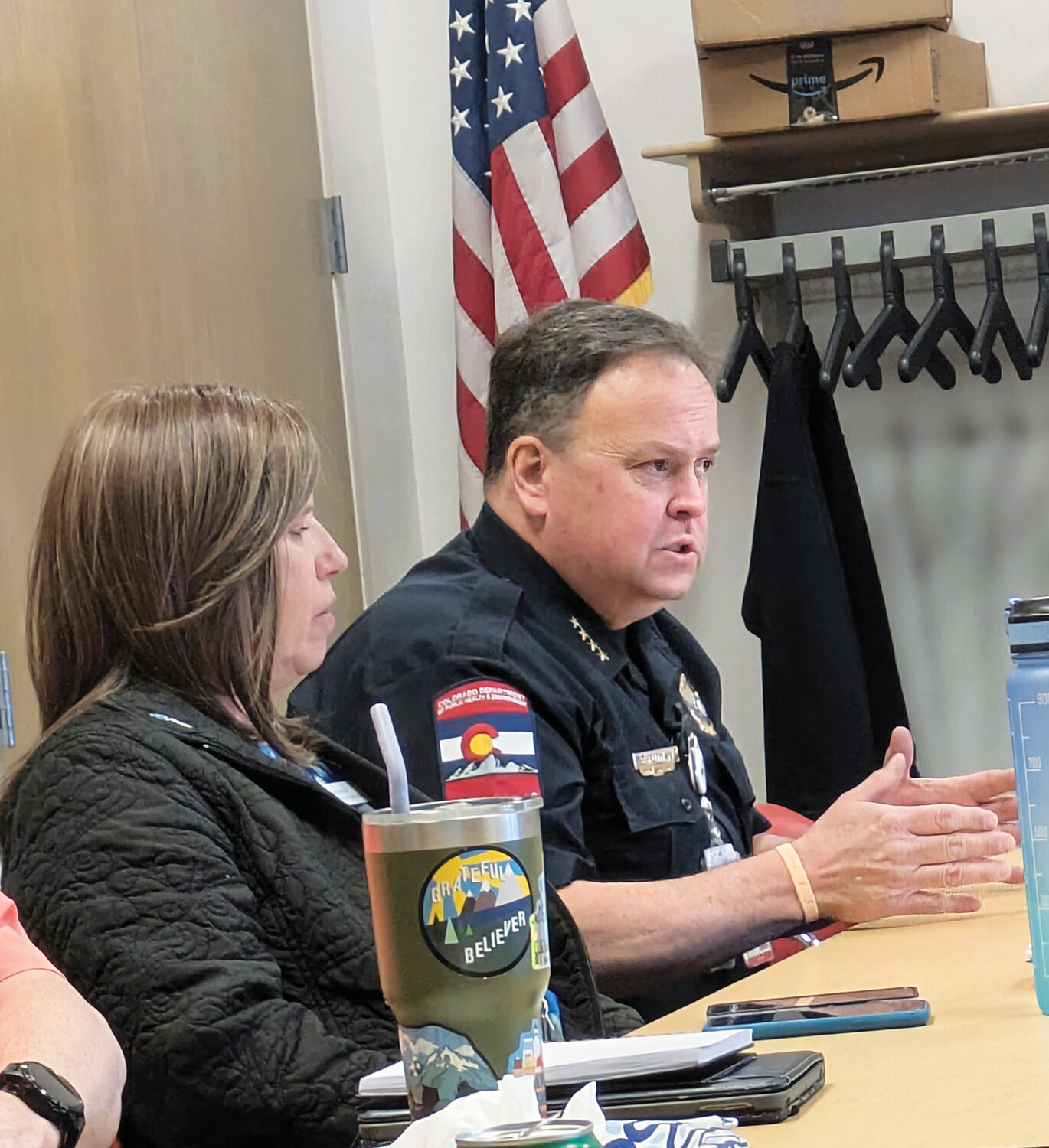
During the meeting, Gilpin County stakeholders spoke about current efforts and challenges in the field.
Deputy Chief Bobby Putnam of Gilpin Ambulance Authority discussed the CARES program (Community Assistance, Resource, and Education), which helps identify hazards in homes, reconcile medications, and support recovery patients in non-emergency situations.
The ultimate goal is to establish a certified community paramedic program, but current policy prevents reimbursement through Medicare, Medicaid, or private insurance. “Everything that we do has to become secondary to grants, money rolled into a budget, and things like that,” Putnam said.
Putnam also noted ongoing efforts to partner with the Sheriff’s Department and Black Hawk Police to create a secure transport vehicle for behavioral health patients—an alternative to sending individuals in crisis to an emergency room, which often cannot provide appropriate care.
Sheriff Kevin Armstrong spoke about the County’s new telehealth-enabled co-responder system, developed with support from GROC. The program connects people in crisis directly to clinicians at Jefferson Center for Mental Health using mobile video equipment.
Armstrong explained that it helps law enforcement stay in the field and reduces the need for long-distance transports.
Transportation, or its lack, was identified as a general barrier to accessing recovery programs and youth services. One attendee noted that their department often struggles to get young people to afterschool programs or wellness activities, stressing the need for improved infrastructure and coordination.
Breaking the cycle
Multiple participants raised concerns about how to reach youth who live in households affected by substance use disorder. Armstrong mentioned the need for school-based education that helps children understand and cope with these realities, in order to prevent generational cycles of addiction.
Putnam addressed the issue of stigma, which can prevent individuals from seeking help or engaging with services. “The only way we're ever really going to identify everyone is as soon as we take the stigmatism away from the ‘fact’ that you're an evil, horrible person by having an addiction,” he said.
The conversation also acknowledged that addiction and mental health issues are often intertwined.
As Putnam noted, people experiencing mental health challenges frequently self-medicate with opioids or other substances.
GROC leaders reminded the group that opioid funds may be used for co-contributing factors such as mental illness, housing insecurity, and poverty.
What’s next
The current Request for Applications (RFA) is open through March 31. Organizations can apply for up to two years of funding, with a possible third-year renewal. All applications are reviewed by at least four people, including representatives from each county and the advisory board.
The Council plans to hire an external program evaluator later this year to help assess outcomes, improve transparency, and ensure funds are making an impact across Region 10.
To stay involved or submit a proposal, visit the GROC website, subscribe to the public calendar, or attend a council meeting. Shore encouraged anyone with lived experience, community insight, or a project idea to reach out directly.
Learn more
Website: gatewaytotherockiesopioidcouncil.org
YouTube: Region10_GROC
Google Calendar: Public Meetings and Events
Contact: Dr. Chelsea Shore at cshore@co.jefferson.co.us


