
For the last eight months, local parents of toddlers to 10-year-olds have gathered to discuss parenting techniques that will develop their child’s social emotional skills. When asked what they
This item is available in full to subscribers.
At this time, we ask you to confirm your subscription at www.themtnear.com, to continue accessing the only weekly paper in the Peak to Peak region to cover ALL the news you need! Simply click Confirm my subscription now!.
If you are a digital subscriber with an active, online-only subscription then you already have an account here. Just reset your password if you've not yet logged in to your account on this new site.
Otherwise, click here to view your options for subscribing.
Questions? Call us at 303-810-5409 or email info@themountainear.com.
Please log in to continue |
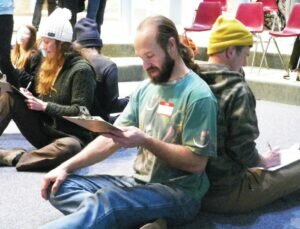
For the last eight months, local parents of toddlers to 10-year-olds have gathered to discuss parenting techniques that will develop their child’s social emotional skills. When asked what they gleaned from the Mountain Strong Families Series, parents rippled forth with a variety of responses:
• I love being offered a different approach to parenting than the one I received. I was conditioned to stuff my feelings, “or I’ll give you something to cry about.”
• I like trying out new approaches and seeing how the outcome for my child drastically changes.
• I appreciate developing a community of like-minded parents. This is the first time I’ve felt validation for how hard a job parenting is.
• I’ve retaken this series several times as my children have aged. Each time I take away new tools to use with them.
• This series has made my life significantly easier. I need these tools to get through each day. I’m a happier parent now.
• I appreciate how each session offers a new idea or practice to use with my children.
Parents also indicated that their friends around the country are amazed that we have this free parenting series in our community. Mountain Strong Families has been hosted by TEENS, Inc. (and held at Nederland Elementary School) for the last several years. The classes support the social emotional learning that PreK - 5th graders receive in school. Mountain Strong Families Facebook Group also offers support all year long.
In the final session, parents looked at how to create a sense of security in children. Dr. Dan Siegal reminds us that a sense of security comes from knowing that conflicts will be addressed and relationships will be repaired when feelings have been hurt. A variety of problem-solving steps and restorative techniques were offered for developing children with a felt sense of security.
To raise competent problem-solvers, we want to focus on generating mutual solutions that we have created together. It may be quicker to impose our adult solution in conflict situations, but that doesn’t help develop a child’s ability to solve problems for themselves. We want to engage children’s brains in the process of resolving and repairing.
Adults must be relatively calm and curious in order to facilitate a child’s problem-solving skills. Mountain Strong parents shared how they are intentionally finding ways to care for themselves so they will show up as emotionally generous when their children quarrel. One mom regularly takes time to have a long bath, another makes time to dance or play a sport. One dad schedules time to go on a motorcycle ride while another remembers “this breath is just for me.”
Parents reflected on the steps they will coach a child to use when there are conflicts. We can’t listen or problem-solve when we’re emotionally charged. So, first and foremost, emotions need to be addressed. We can acknowledge how everyone is feeling and then pause to de-escalate big emotions. We might say, “It seems like everyone is really upset. Let’s take a moment to prepare ourselves for a Do-Over.” We can help children know which calming strategies work best to help them integrate their brain. Practicing these strategies alongside our child helps them to co-regulate.
Once we sense that everyone is calmer, we can slowly take the time to coach children to mindfully speak and listen to everyone’s perspective. We might say, “Let’s take turns using this talking piece to share what each of us is feeling and needing in this situation.” If someone doesn’t feel heard, they will tend to get louder and repeat themselves over and over. We can ask children to summarize what feelings and needs they heard the other person expressing before defending their own position. We can either coach children to use an I-message to express themselves, or we can reframe any blaming statements into an articulation of feelings and needs.
Once everyone has shared their perspective, it is helpful to state the problem to work on in a neutral way. This assists our brains in entering a problem-solving mode rather than a defensive posture. For instance, “It looks like the problem is there is only one toy and you both want to use it.”
It becomes easier for everyone to generate and then evaluate various solutions that respect everyone, if we state the mutual problem and ask for the child’s ideas to solve it, i.e. “What ideas do you have for solving this problem?” Adults can get the creative juices flowing by offering a silly solution. After several ideas have been offered, we’ll want to ask, “How does everyone feel about these ideas?” Evaluating solutions from everyone’s perspective helps to narrow in on which one to try.
Children who know how to utilize these steps have typically had practice using the regular routine of holding family meetings. Children need us to coach them through these processes or the more powerful family member may dominate the outcome.
Even if following these steps helps solve the problem at hand, we may need to do something more to repair hurt feelings and make amends that will restore the relationship. We’ll want to coach a child to create a genuine apology by discussing these aspects: Say what you are sorry for, indicate you know how the other person is feeling, share how you would do things differently next time, and offer ways to make things right again (i.e. a band-aid, a hug, an invitation to do something fun together, etc.).
One family shared that they post the components of a genuine apology on the refrigerator. When needed, they face each other and hold hands, then take turns being accountable for what they said or did. They often end with a hug. Every time we model how to repair and resolve conflict, we are teaching trust and creating a sense of security in our children.
The next Mountain Strong Families Series will begin in September. Please contact ann@teensinc.org for more information. We’d love to share a meal, childcare, tons of ideas, and a warm group of parents with you!


