
Last winter saw the Peak to Peak region in a state of shock and anxiety as the greater community came face to face (literally, in some cases) with the state’s most feared and misunderstood wild
This item is available in full to subscribers.
At this time, we ask you to confirm your subscription at www.themtnear.com, to continue accessing the only weekly paper in the Peak to Peak region to cover ALL the news you need! Simply click Confirm my subscription now!.
If you are a digital subscriber with an active, online-only subscription then you already have an account here. Just reset your password if you've not yet logged in to your account on this new site.
Otherwise, click here to view your options for subscribing.
Questions? Call us at 303-810-5409 or email info@themountainear.com.
Please log in to continue |
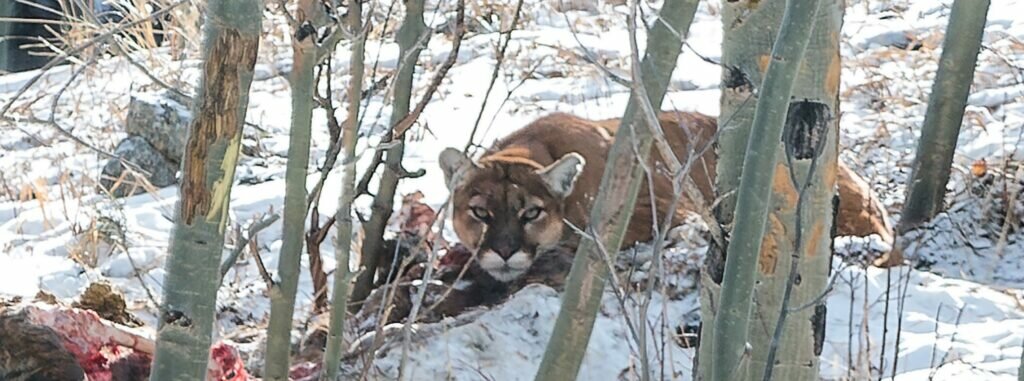
Last winter saw the Peak to Peak region in a state of shock and anxiety as the greater community came face to face (literally, in some cases) with the state’s most feared and misunderstood wild creature; the mountain lion. Multiple attacks on pets and close encounters with humans typically with said pets had the area abuzz with the conversation of the problem. As we settle into another winter, I felt it appropriate to address these amazing and oft fearsome animals.
Last year’s encounters varied widely, and while a lion has a territory radius of about 50 miles, it is likely that the encounters were with different cats as opposed to a single bad apple. The reality of this area is that there are, in the words of a CPW officer, more cats in the area than most folks would care to know about.
This is not to say the state has an overpopulation or that we are seeing a population explosion. It simply means we (and they) also enjoy a robust elk and mule deer population, the lion’s main food source. The combination of human encroachment on their territories and recent wildfires around the state have pushed them into a much smaller area from which to hunt.
It also bears noting that we are “seeing” more of them simply due to modern technology in the way of outside home and game cameras, providing a view never experienced before. Prolific sharing of footage on social media and the greater human network simply makes it feel like there are more of them when we are only just now actually seeing the same number we’ve always had.
In the world of mountain lions, the two most likely suspects for bad interactions with humans are young cats and the oldest. Young cats newly on their own can’t compete with a cat in its prime for feeding territory. They are forced into hunting smaller prey until they can establish and grow into their own territory. More humans mean more pets, and pets make for a very easily hunted substitute. Also, being young, they have yet to learn to be wary of humans, especially if their mother was killed before she was able to teach them accordingly.
As to the oldest being problematic, Nederland learned about that a few years ago when we had a similar situation with a cat in town not being afraid of humans and going after pets. After a couple weeks of harrowing incidents, the cat was found dead along the creek. An autopsy found her to have been at least 16 years of age, which is the very top of the average age for a wild lion. Aging a predator is aided by looking at their teeth. An old predator’s teeth become very worn down and they lose their ability to hunt big game effectively. In the case of that cat, she was going after pets and showing no fear of humans simply, and sadly, because she was literally starving to death.
Being wary of lions is quite healthy, but being fearful can lead to extreme overreaction, often leading to the unnecessary death of a cat that isn’t and likely never was a problem. It is key to remember that we as humans are not food prey for them in any way. It is also key to remember that while we are not food, they are cats, and anyone who has ever been around a housecat knows well their love for a chase.
Statistically, attacks on humans are incredibly rare (roughly 120 or so in the last 100 years, and only 27 fatal). Attacks are generally triggered by movement which sets off the cat’s natural instincts to chase, i.e. bicycling, jogging, etc. Often, the cat will recognize the size of an adult and disengage before an attack occurs (again, we’re not food, and they are not the sadistic killer our minds may make them to be). If an attack occurs, it is imperative that one fights back with everything they can muster, which will often cause disengagement. A wild animal knows well that even a small injury can spell its demise.
Another factor in attacks on humans is children, simply due to size and playfulness. When living next to wilderness it is imperative that kids should not be left unattended outside during prime hunting times (dawn and dusk) or at all if a cat is active. This isn’t the suburbs, and as much as we all like to call this land home, it is the cat’s home as well, and has been for far longer than we humans. Also, when hiking, children should always be between adults, not left to run ahead (or behind).
Pets should not be left unattended outside during the same peak hunting hours. Even in broad daylight an unattended pet can be a prime target if a lion is active in the area. That said, pets make for a relatively easy catch, but ultimately a lion wants a more substantial meal. Larger dogs can also be risky to them, as again, any possible injuries from a fight could well mean death for the cat in the wild.
Living close to any wildlife takes a bit of adjusting of lifestyles to accommodate cohabitation. It can be done, and has been done for a very long time, but absolutely must be done with forethought and caution. In doing so, we can come to a better understanding and appreciation of the great gift of wild nature we are blessed to live with and in every day.
For information on this subject go to https://en.wikipedia.org/wiki/List_ of_ fatal_ cougar_ attacks_ in_ North_ America#:~:text=A%20total%20of%20 126%20attacks,Children%20are%20 particularly%20vulnerable.
For additional information about James DeWalt Photography, check out https://jamesdewaltphotography.com.


