
Long-time residents may reflect on many years of stopping along the Boulder/Gilpin County line on a drive along the Peak to Peak highway to enjoy the stunning view of Baldy, and if lucky, catch
This item is available in full to subscribers.
At this time, we ask you to confirm your subscription at www.themtnear.com, to continue accessing the only weekly paper in the Peak to Peak region to cover ALL the news you need! Simply click Confirm my subscription now!.
If you are a digital subscriber with an active, online-only subscription then you already have an account here. Just reset your password if you've not yet logged in to your account on this new site.
Otherwise, click here to view your options for subscribing.
Questions? Call us at 303-810-5409 or email info@themountainear.com.
Please log in to continue |
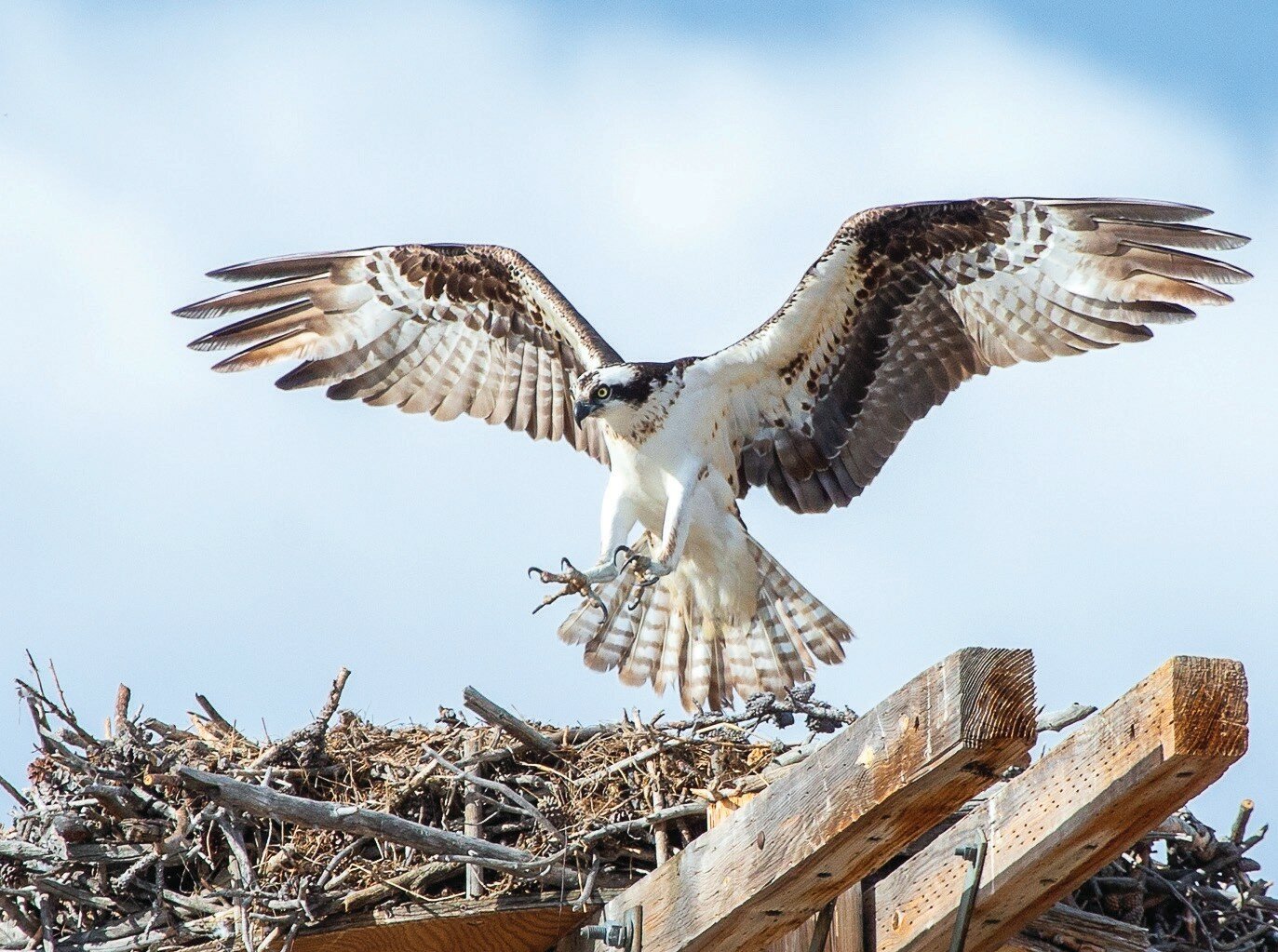
Long-time residents may reflect on many years of stopping along the Boulder/Gilpin County line on a drive along the Peak to Peak highway to enjoy the stunning view of Baldy, and if lucky, catch some fishing action by the resident pair of osprey.
Nothing quite made a drive home after a long day like taking in the setting sun over the divide, and watching the resident raptors through binoculars as they performed their unique, full-body plunge into the chilly waters, emerging triumphantly with a fat trout for dinner. Occasionally we would be blessed by a low pass over the highway as they headed into the trees of the Kelly Dahl campground to dine on their pescatarian delight.
Sadly, that pair has not been seen since 2020 on the nest they called their summer home. Since osprey typically migrate to the same nest year after year, one can only assume they came to their natural end. While occasional individual osprey have since been spotted flying between the roadside lake and Manchester Lake, a mated pair has yet to take over the nest.
The resident elder bald eagle pair still enjoy the comforts of their platform, from which they fish and enjoy the spectacular views, but they typically move deeper into the property as summer sets in so they can fish from bigger waters, leaving the nest as an occasional place of respite for themselves, or sometimes for the herons who enjoy the lake as well.
Osprey are known to form a monogamous breeding relationship for life; however, they tend to pair up only during the mating and nesting season. They live the remainder of the year, including during migration, as solitary individuals. Even when a pair is brooding, the male may also build a second nest nearby, allowing a place for either parent to get away for a bit while the mate takes their turn with incubation. Or, later, to escape the nest crowded with chicks.
In my own years of observing our local pair, I’m not sure I ever saw a second nest, nor behavior displaying the existence of one, as they seemed to enjoy one another’s company as they shared their home. They did, however, enjoy perching on a few specific trees and utility poles around the lake where they could still be in close communication with each other.
Typically, the male of the pair will be the first to arrive to the summer home, spending a few days repairing the nest and building it back up after it had been blasted by winter’s winds. The image featured this week was captured on just such a sunny April day of nest rebuilding and refortifying.
Sometimes a solitary female on her own journey north might take rest with the male before his mate arrives, but she is immediately evicted upon the matron’s return. It is possible that the lone female might be offspring from a previous year, simply knowing the nest as her birth home and the male as her parent.
Osprey do not begin to mate until around their fourth year, and until they find a mate will often live alone or in a small roosting group. It is not until a mating bond is formed that they seek out or build a nest.
In the case of our long-time residents, they seemed to enjoy the nest as a pair for the duration of the summer, whether or not they had a successful clutch of eggs. This is not always the case for osprey, as sometimes, if a pair is unsuccessful, they may part ways early and go back to their solitary existence until it is time to try again the next year.
As last year’s summer was winding down, I was driving past the lake one evening and my eye was caught by a familiar looking white head and dark body. A lone osprey sat proudly on one of the perches adjacent to the nest. It made my heart swell, thinking that maybe one of the offspring of our pair was scoping out the territory before heading south for the winter.
It’s now mere weeks away from the annual return. I hold deep hope that this year we will see not only the return of that bird, but also see a mate, once again to take up summer residency in the most-perfect mountain nest with that very best view of our Indian Peaks Wilderness in the distance.
**For newcomers to the area, please note that the lake is private, and no trespassing is allowed, hence my statement regarding binoculars. The human and wildlife residents thank you for keeping it that way.
For additional information about James DeWalt Photography, check out https://jamesdewaltphotography.com.


