
People often consider fires a negative element or a destructive force, but the meaning of “fire” varies across cultures and generations. It can signify something cool, awesome, or exciting.
This item is available in full to subscribers.
At this time, we ask you to confirm your subscription at www.themtnear.com, to continue accessing the only weekly paper in the Peak to Peak region to cover ALL the news you need! Simply click Confirm my subscription now!.
If you are a digital subscriber with an active, online-only subscription then you already have an account here. Just reset your password if you've not yet logged in to your account on this new site.
Otherwise, click here to view your options for subscribing.
Questions? Call us at 303-810-5409 or email info@themountainear.com.
Please log in to continue |
People often consider fires a negative element or a destructive force, but the meaning of “fire” varies across cultures and generations. It can signify something cool, awesome, or exciting. Sometimes it conveys that someone is “hot,” as in sexy. Sometimes fire is a symbol that represents something more powerful than we can imagine.
Fire is also associated with rebirth and renewal in mythology. Fire today is recognized as an instrument of change and a catalyst for promoting biological diversity and healthy ecosystems. For many Native American cultures, fires are sacred and imply change.
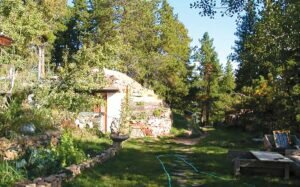
Amara East learned to lead fire ceremonies from a Nederland flute player and ceremonialist, Lisamarie. East has been Gold Hill Kiva’s fire ceremonialist for about eight years. The Kiva was built in 1989 per the request of Joseph Rael (Pueblo).
On the seventh of every month roughly 15 participants gather at the Gold Hill Kiva, Thundersong Kiva, and lift their voices in song and drumming. The participants are creating a wave of peace, harmony, and positive vibration.
At 6 p.m. singing, chanting, drumming, and vowel sounds by Beautiful Painted Arrow begin the vibrational offerings. An hour later, at 7 p.m., the fire is lit, during which everyone watches in silence until the fire disappears.
Afterward, everyone is welcome to share what they experienced while watching the fire. Should you arrive later, you’re asked to enter the Kiva in silence and are asked to sage yourself before entering.
Two days after the Gold Hill Kiva fire ceremony, falling on Easter Sunday this year, a sweat lodge honoring four directions is held. Twenty participants share songs promoting peace and harmony. A potluck is also enjoyed on this day.
Rocks are set on fire two to three hours before the sweat lodge begins. Rocks are brought inside a few at a time and placed in the center of the dark lodge. Water is thrown on the rocks to promote heat and steam.
During the sweat lodge, participants can create intentions, pray, and find healing. Many kivas were built throughout the world for the purpose of sending healing prayers to the waters of the world. Ceremonies occur on the same day around the world at 7 p.m. local time.
Please note that fire ceremonies at Gold Hill are hosted responsibly. Permission is granted before a fire is lit and the fire department is notified about the event. There is no charge for the ceremony and donations to the chamber for the firewood are always appreciated.
Fire does not always have to be scary. It is a way to heal, bond, and begin sacred ceremonies, events, or rituals. There are lessons fires offer, including remembrance, healing, and togetherness.
To learn more about the Gold Hill Kiva, find them on Facebook at https://www.facebook.com/goldhillkiva or give them a call at 303-449-3797.


