
In a bid to tackle the shadowy underbelly of human trafficking, the Denver-based organization, The Lab to Combat Human Trafficking (LCHT), held an illuminating workshop sponsored by the Black
This item is available in full to subscribers.
At this time, we ask you to confirm your subscription at www.themtnear.com, to continue accessing the only weekly paper in the Peak to Peak region to cover ALL the news you need! Simply click Confirm my subscription now!.
If you are a digital subscriber with an active, online-only subscription then you already have an account here. Just reset your password if you've not yet logged in to your account on this new site.
Otherwise, click here to view your options for subscribing.
Questions? Call us at 303-810-5409 or email info@themountainear.com.
Please log in to continue |
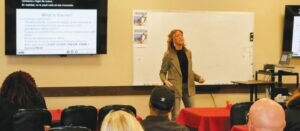
In a bid to tackle the shadowy underbelly of human trafficking, the Denver-based organization, The Lab to Combat Human Trafficking (LCHT), held an illuminating workshop sponsored by the Black Hawk Police Department and Gilpin County Sheriff’s Office on February 29, 2024. The workshop aimed to equip casino workers, first responders, firefighters, and law enforcement personnel in Black Hawk with the necessary tools to recognize and combat human trafficking.
Led by speakers Kara Napolitano and Kristina Wilburn, the two-day workshop titled “Human Trafficking 101” was held at the Gilpin Casino Conference Room. Designed for individuals with minimal prior knowledge on the subject, the workshop sought to dispel myths, educate attendees about the scope of human trafficking in Colorado, and highlight casino-specific red flags indicative of exploitation.
Kristina Wilburn, Associate Manager of Training and Education at LCHT, brought her expertise, holding both a master’s degree in social work from the University of Denver and a doctorate from the Valparaiso School of Law. Drawing from her extensive experience working with survivors, Wilburn shed light on the intricate legal and social dimensions of human trafficking.
The workshop commenced with an in-depth exploration of the root causes and factors contributing to human trafficking, emphasizing the importance of community support systems in aiding survivors’ reintegration into society. Attendees were encouraged to develop protocols for identifying red flags and establishing networks with agencies dedicated to assisting survivors in their recovery journey.
The presentation underscored the harrowing reality that human trafficking transcends borders and affects individuals from all walks of life. Traffickers exploit vulnerabilities stemming from homelessness, lack of love, and trauma, preying on marginalized populations such as the LGBTQ community and individuals with disabilities.
Throughout the workshop, personal anecdotes shared by the speakers offered a poignant glimpse into the lived experiences of survivors, eliciting shock and empathy from participants. The pervasive nature of trafficking, often disguised as domestic violence, was a sobering revelation.
As the COVID-19 pandemic exacerbates online solicitation, the workshop stressed the need for vigilance in safeguarding vulnerable populations. Tools like the B.A.R.K. application were recommended to monitor online activities and protect children from potential exploitation.
Echoing concerns specific to the Black Hawk community, the workshop emphasized the susceptibility of casinos, hotels, and ski resorts to trafficking activities. Anecdotes shared, such as the case of a female coerced into drug addiction before being sold for sex acts within a casino hotel, underscored the reality of the issue.
In response, the Black Hawk Police Department has been proactively engaging in awareness campaigns and exploring innovative strategies to reach victims. Initiatives such as distributing helpline cards and posting informational posters in strategic locations aim to empower both victims and bystanders to seek assistance.
Casino employees were encouraged to remain vigilant for red flags and approach potential victims discreetly, offering access to resources without necessarily involving law enforcement.
The workshop concluded with a commitment to follow-up with attendees, providing comprehensive resources to aid in combating human trafficking. A second training workshop with more advanced material will likely be offered in late April.
For those seeking further information or assistance, LCHT offers a hotline managed by volunteers, operational 24/7, and accessible at 866-455-5075. Additionally, individuals can book training sessions with LCHT through their website at https://combathumantrafficking.org/how-to-help/get-trained/.
The workshop served as a useful reminder of the pervasive nature of human trafficking and the urgent need for collective action to combat this insidious crime, ensuring that no individual falls through the cracks of exploitation and abuse.


