
CSU Extension Agent Jennifer Cook identified a number of invasive plants that pose a threat to local ecosystems at a noxious weed workshop on July 9, 2024, at the Black Hawk Public Safety
This item is available in full to subscribers.
At this time, we ask you to confirm your subscription at www.themtnear.com, to continue accessing the only weekly paper in the Peak to Peak region to cover ALL the news you need! Simply click Confirm my subscription now!.
If you are a digital subscriber with an active, online-only subscription then you already have an account here. Just reset your password if you've not yet logged in to your account on this new site.
Otherwise, click here to view your options for subscribing.
Questions? Call us at 303-810-5409 or email info@themountainear.com.
Please log in to continue |
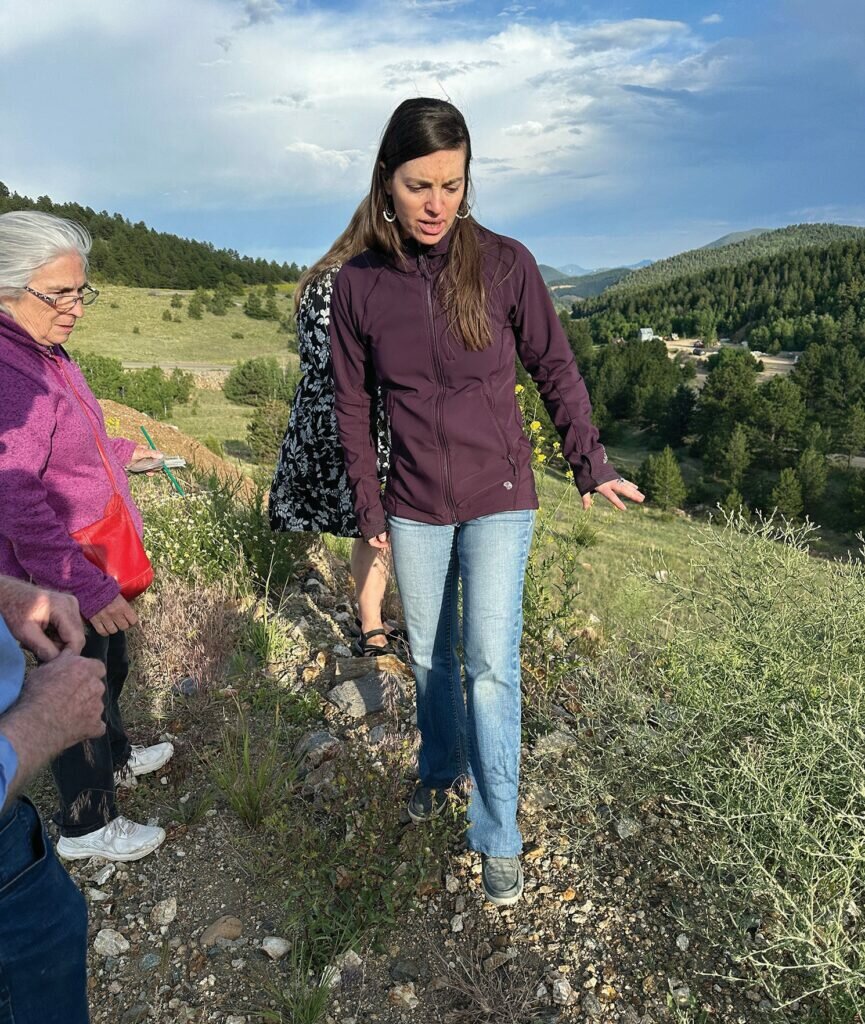


CSU Extension Agent Jennifer Cook identified a number of invasive plants that pose a threat to local ecosystems at a noxious weed workshop on July 9, 2024, at the Black Hawk Public Safety Building on Miners Mesa. The purpose of the meeting was to help residents recognize invasive plants that need to be eradicated or controlled in order to protect pristine landscapes.
Environments are delicate biological habitats that have developed over long periods of time to be in balance and support a complex web of life. Invasive plants and animals upset that delicate balance and permanently degrade the environment.
Officials consider the discovery of Zebra mussels in the Colorado River near Grand Junction to be devastating news. These little bivalves are invasive. The larvae strip plankton from the water, depriving native species of food. The mussels can attach to docks, dams, and other water infrastructures, threatening to damage water supplies that support 40 million people in a seven-state region.
Invasive plants threaten local habitats and can cause lasting damage to wildflower and animal populations. Cook encouraged workshop participants to learn to identify noxious plants on their properties and work to eradicate or control them.
The PowerPoint presentation, with photos of noxious plants and benign lookalikes can be found on the extension website (gilpin.extension.colostate.edu/programs/natu/noxious-weeds) under the “Gilpin County Noxious Weeds (with Lookalikes) Presentation July 2024” link.
Cook is also organizing a field trip to pull Oxeye Daisies at the Moffat Tunnel trailhead on July 26 from 9 a.m. to noon. Volunteers for this invigorating experience need to register at volunteervoc.org/need/detail/?need_id=906526.
Extension Agent Jennifer Cook (303-582-9106/Jennifer.Cook@colostate.edu) also has materials and information on identifying noxious weeds and plants.


