
Colorado’s mountain meadows are bursting into color as wildflower season brings some of the state’s most beloved native blooms
This item is available in full to subscribers.
At this time, we ask you to confirm your subscription at www.themtnear.com, to continue accessing the only weekly paper in the Peak to Peak region to cover ALL the news you need! Simply click Confirm my subscription now!.
If you are a digital subscriber with an active, online-only subscription then you already have an account here. Just reset your password if you've not yet logged in to your account on this new site.
Otherwise, click here to view your options for subscribing.
Questions? Call us at 303-810-5409 or email info@themountainear.com.
Please log in to continue |
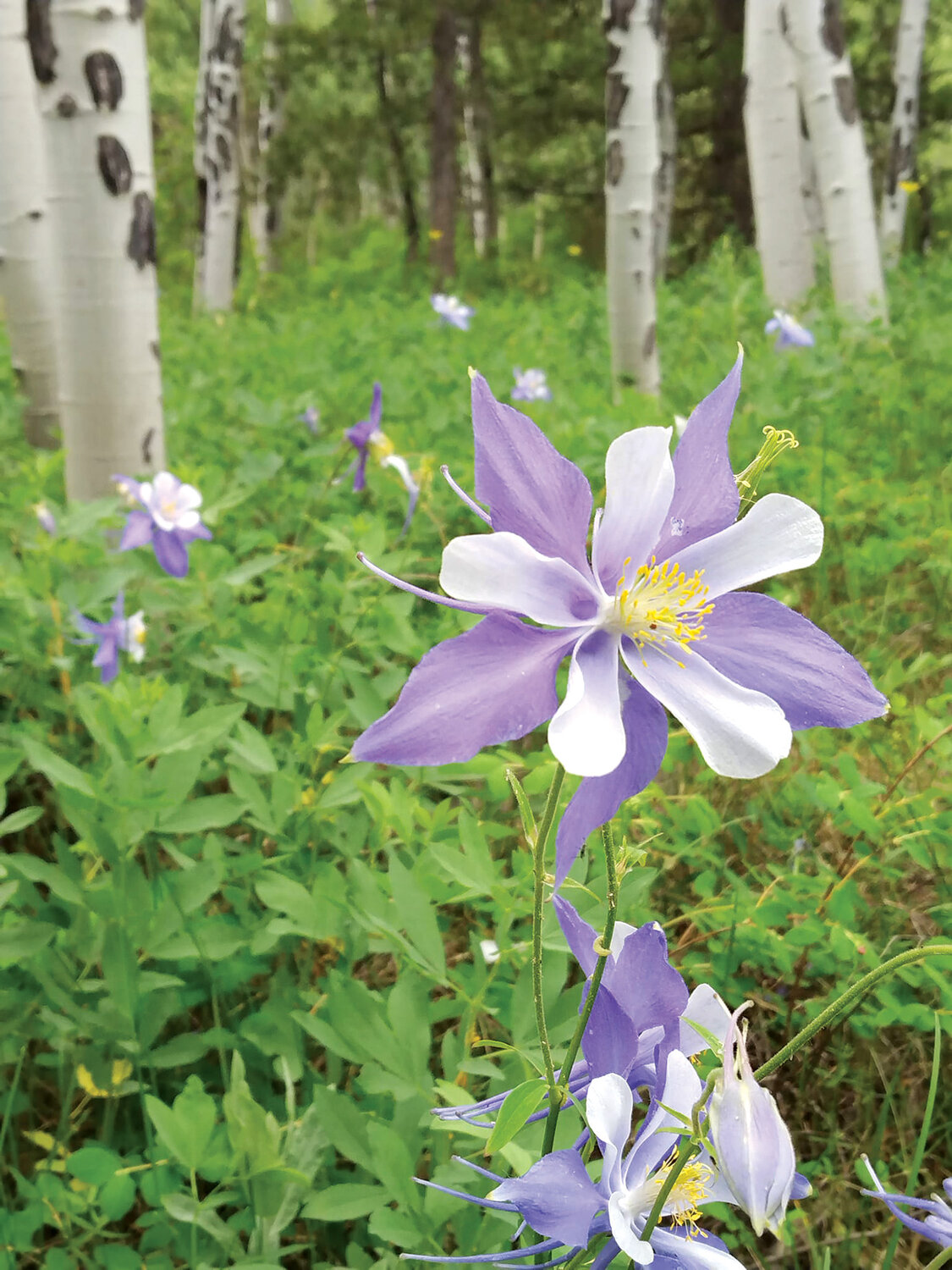
The Colorado state flower, the Rocky Mountain Columbine.

A Beardless Sidebell Penstemon soaks up some sun.

Indian Paintbrush glows bright among a variety of wildflowers.

Gunnison's Mariposa Lily dawns drops of dew.

A sea of Golden Banner flows out into a mountain meadow.


PEAK TO PEAK — Reds, blues, purples, yellows, pinks, oranges, and all the shades in between will soon be splashing their vibrant colors all across mountain meadows in colorful Colorado. Many of us mountain residents wait all year long for the short but magnificent time of year when wildflowers peak.
The first flower that catches my eye every year and grows in large lush patches is one of my favorites, the Golden Banner, a wildflower native to Colorado. In certain places, like Magnolia Road in Nederland, they grow in large, vast patches, coming up from the brand new grass that spring has thrust up from the earth.
Also known as Thermopsis Rhombifolia, this lovely flower belongs to the pea family. As a legume, this plant also offers nitrogen fixation, which means it forms a symbiotic relationship with nitrogen-fixing bacteria which then enriches the soil.
Very soon after the Banner runs its course, we start to see the Rocky Mountain Columbine delicately rise for its stint above ground. Aquilegia Caerulea, our state flower, looks like a piece of art. The lovely purple and blue hues that grace its grand flower stand on a thin green leaf stalk, and sway with the breeze in a way that almost looks as if the plants are dancing.
If you have ever seen the Columbine out in the wild, it’s quite impressive that they survive in the environment and conditions that they do, as fragile as they seem. For this reason, they are said to be a symbol of grace in perseverance. They also hold significance in many different ideologies from Norse mythology to Christianity.
One of the flowers I find myself most excited to see every year is the vibrant Indian Paintbrush. With tufts of almost glowing red petals growing in a paintbrush-like formation, Castalleja Miniata is one of the most unique flowers to bloom in Colorado.
Indian Paintbrush thrives so well in Colorado because it is a hemiparasite, which means that it can draw nutrients and water from surrounding organisms in order to survive, allowing it to survive in more sandy, dry areas.
Native American tribes used the plant for medicinal purposes such as pain relief from rheumatism and even reproductive health. That being said, please remember that it is prohibited on public lands and national forests to harvest wildflowers!
Another flower that always catches my attention due to its eye-catching color is the Beardless Sidebell Penstemon. Varying from an electric indigo to bright fuschia, these bell-shaped flowers stack upwards on top of each other, climbing their tall stalks.
Penstemon Virgatus provides very nectar-rich flowers to pollinators, making them a great addition to your native garden at home. You are most likely to find them in grasslands, meadows, and moist areas within coniferous trees.
Perhaps a more elusive flower, the Gunnison's Mariposa Lily takes the prize as my absolute favorite wildflower in Colorado. With three large petals that are the purest shade of white you’ve ever seen, they can shine out for yards away. Some may grow near each other, but typically, I’ve seen them growing one at a time. Although I have never seen them myself, they may also grow purple petals.
The center of the Colochortus gunnisonii holds a striking masterpiece. A contrasting deep purple rim is next to a collection of yellow-green hairs on the inside underneath six large anthers. Striking against its large white petals, it is truly a beauty to behold. The flowers stem from edible bulbs that were eaten either raw or cooked by the Ute and Shoshone tribes.
My knowledge of these flowers has come largely from exploring various hikes, meadows, and hillsides here in the Front Range. It’s almost impossible for me to observe them without having to know them by name.
They are only here for a short time but leave such an impact on me every year, with every season differing from the last. An annual serotonin boost. Make sure to plan a visit with them this year. You belong among the wildflowers.


