
Walker was inspired to train for the ITI after reading Into the North Wind: A Thousand-Mile Bicycle Adventure Across Frozen Alaska by Jill Homer.
This item is available in full to subscribers.
At this time, we ask you to confirm your subscription at www.themtnear.com, to continue accessing the only weekly paper in the Peak to Peak region to cover ALL the news you need! Simply click Confirm my subscription now!.
If you are a digital subscriber with an active, online-only subscription then you already have an account here. Just reset your password if you've not yet logged in to your account on this new site.
Otherwise, click here to view your options for subscribing.
Questions? Call us at 303-810-5409 or email info@themountainear.com.
Please log in to continue |
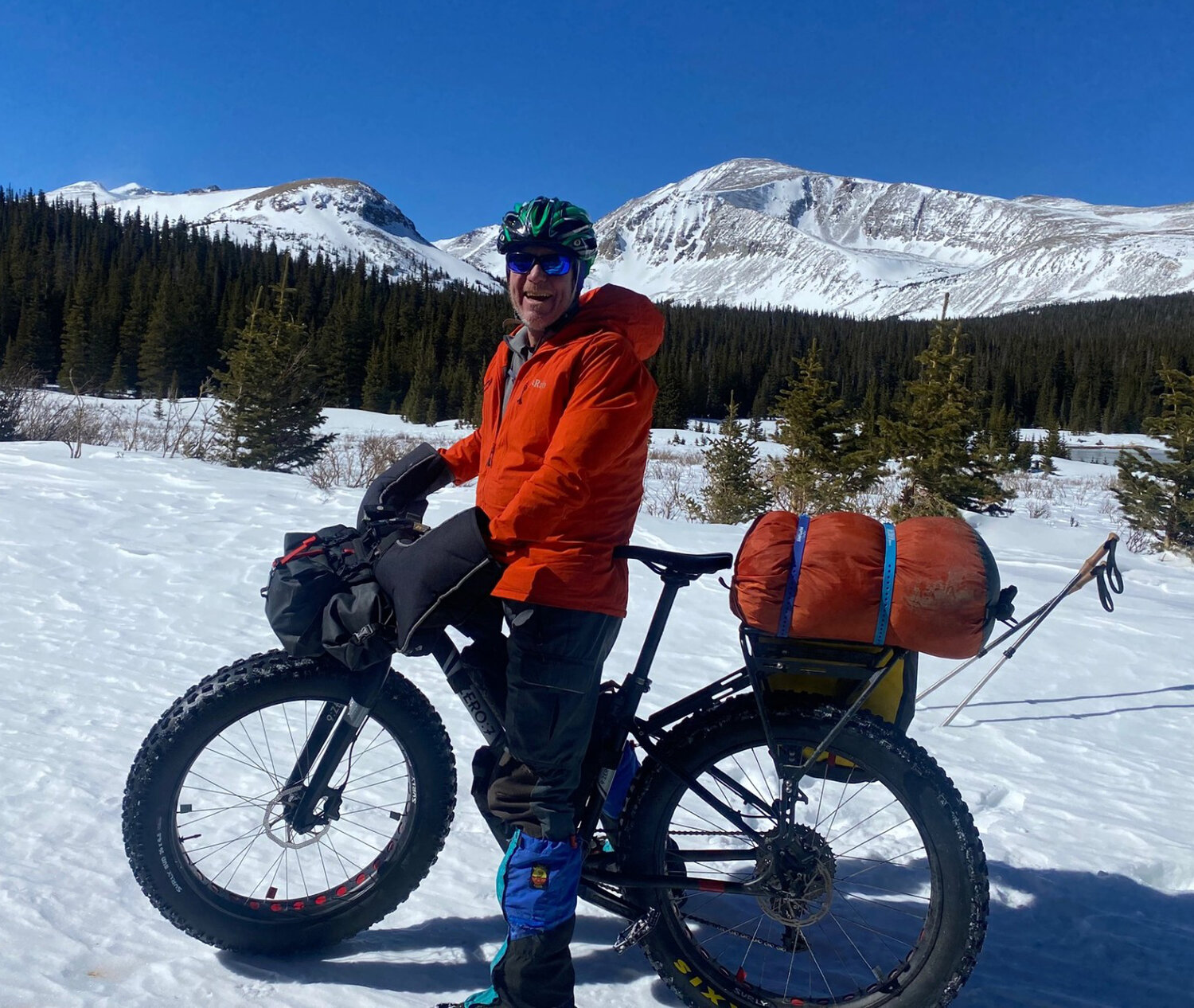
Dave Walker trains for the Iditarod Trail Invitational, with his fat bike loaded for winter camping. The large mittens covering the handle bars are called poagies; they keep the rider's hands warm in extremely cold weather.

Competing in long-distance fat bike races involves long stretches in the saddle in all kinds of weather.

Dave Walker on a previous trip to Alaska, riding the ice and encountering the wonder of the wilderness.

One of the many obstacles on the Iditarod bike trail is water on top of icy swamps, called overflow water. Riders need to carry lightweight hip waders and must carefully cross these dangerous stretches without slipping and falling.


PEAK TO PEAK — What motivates a person to travel thousands of miles to endure arctic cold temperatures, navigate uncharted territory, and place extreme demands on their body, just to receive the equivalent of a participation trophy?
In Dave Walker’s case, the answer is the simple cliché: “The mountains are calling, so I must go.” Walker is scheduled to compete in one of the most extreme fat bike races in the world this month in Alaska.
The Iditarod Trail Invitational (ITI) starts February 22. Walker will be on the starting line for the 150-mile version along the famed Iditarod Trail from Knik Lake to Rainey Pass. There are longer versions of the race that cover the entire 1,000 miles to Nome.
Walker has travelled the world as a mountain guide, a road bike tourist, and someone who thinks of adventure as a lifelong pursuit. He has summited Denali twice, done the Little Bear to Blanca traverse with his brother, and led climbing expeditions to some of the highest peaks in South America.
Fat bikes are year-round off-road bicycles that use ultra-wide and knobby tires for traction on snow and dirt trails. They are designed to carry gear for multi-day excursions and are ultra-tough to prevent breakdowns in the backcountry.
Walker will be riding a 9:ZERO:7 bike, made in Alaska and built to handle the rugged terrain.
He qualified for the ITI by completing the Drift100 last year in Wyoming. The Drift, as it is called, is typically run in March when the snowpack is the deepest. It starts in Pinedale and runs through the Wind River Range.
Walker’s preparations for the ITI included day rides up Rollins Pass and multi-day rides on snow with a bike loaded for winter camping. His bike weighs around 80 pounds and carries extra clothing, food, and tools to work on the bike.
Walker will be taking his arctic sleeping bag and bivouac bag to sleep out under the Aurora Borealis, but said there are also warming cabins and lodges along the way.
The time limit is five days to complete the 150-mile race, but Walker expects to do it in three. The time limit for the 1,000-mile race is 30 days, with riders mailing provisions to post offices at strategic locations, much like through hikers do on the Pacific Crest Trail.
The race itself is basically a set of checkpoints that riders have to pass through, with everything from residential developments to Alaskan wilderness in between. There is no standard route or highway to follow, so route-finding on the trail is a premium skill.
The only hard and fast rule is that it has to be done with human power: no hitching a ride or vehicle assistance of any kind.
Each rider will wear a tracker and can be followed on the ITI website. The list of riders and their tracking numbers will be published once the race has started. The organizers won’t know who is in the race until they actually show up at the starting line.
Walker was inspired to train for the ITI after reading Into the North Wind: A Thousand-Mile Bicycle Adventure Across Frozen Alaska by Jill Homer. This book chronicled the author’s ride in the 2026 ITI. Homer, who lives in Boulder, autographed Walker’s copy.
While there aren’t any financial prizes to completing the ITI, Walker has a donation page setup to help the mostly indigenous communities in western Alaska that were impacted by Typhoon Halong. The typhoon caused extensive flooding and damage in October 2025.
He wrote: “The villages located along the routes are primarily inhabited by native Alaskans with limited resources, yet they welcome ITI racers into their homes and schools along the way providing much needed shelter and meals to weary racers.”
Walker’s donation page is: givengain.com/project/david-raising-funds-for-intrepid-path-association-119041.
When asked what he is looking forward to the most about the race, Walker said seeing the green spectrum of the Aurora Borealis. Racing and adventuring under the Northern Lights with a chance to help people in need is how he answers the call of the wild.
Learn more about the race at itialaska.com.


